A 100% Natural
Rumen Buffer

- RUMI-BUFF is a natural slow release buffer derived from calcified seaweed.
- RUMI-BUFF is used primarily in ruminant feed.
- RUMI-BUFF reduces acidosis risk and improves fibre digestion through improving microflora.
- RUMI-BUFF leads to improved feed conversion ratio and production.
Natural Origin
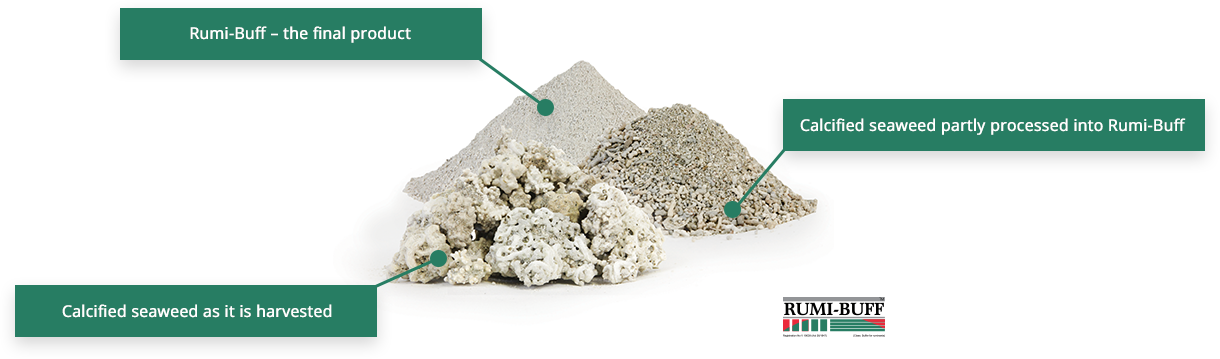
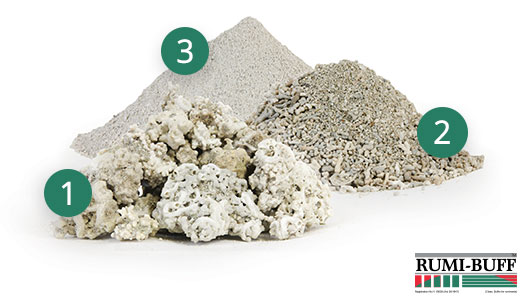
Phymatolithon or Lithothamnium calcareum is calciferous seaweed extracted from 10 to 20 metres below sea level on seabeds of Northern Europe.
This marine algae has the ability to concentrate seawater minerals, into primarily calcium and a considerable amount of magnesium, as well as various other minerals of value.


Active
Composition
DRIED AND GROUND CALCIFIED
SEAWEED LITHOTHAMNIUM CALCAREUM
Features:
• No additives
• Fine granulated form
• Easy to handle
• Palatable
• Safe, sterilised and non-hazardous
• Easily pelletised
• Non-hygroscopic
• Low dust level
• Good mixability
RUMI-BUFF
- 340 g/kg Calcium minimum
- 100% plant origin
- Unique physical structure
- Natural without additives
- Product certified GMP+
ANIMAL
- Optimal rumen buffering
- Long acting
- Low inclusion rate
- Palatable
- Safe
FARMER
- Improved profits
- Lowered risk
- Security, confidence
- Concentrated buffer frees up space in the ration
BENEFITS
- Substantially reduces sub-acute acidosis
- Promotes wellbeing
- Improves feed conversion ratio
- Increases production
High Surface Area
BETTER ASSIMILATION
RUMI-BUFF specific surface: 1 g > 8.5 m2 for powder 80% ≤ 0.315 mm. The high surface area and organic mineral composition of RUMI-BUFF ensures a solubility that quickly neutralises rumen acids. This results in a more stable rumen pH. It is a highly effective method of managing rumen pH and thereby combating sub-acute rumen acidosis.
POROSITY OF RUMI-BUFF
RUMI-BUFF has a unique porous, honeycomb-like structure, quite different from inorganic calcium carbonate which has a compact crystalline structure.
RUMI-BUFF has a specific surface about 5.5 times higher than traditional calcium carbonates. This results in better absorption benefitting the animal.
Microscopic photos of rumi-buff
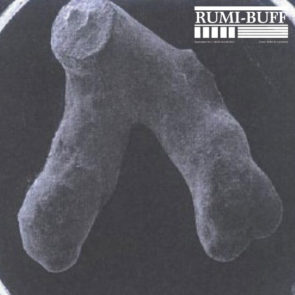
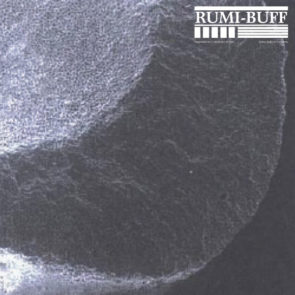
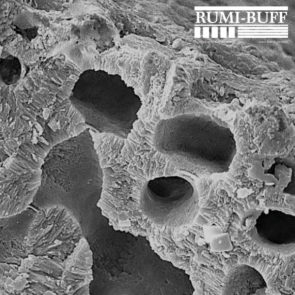
Microscopic photos of Rumi-Buff
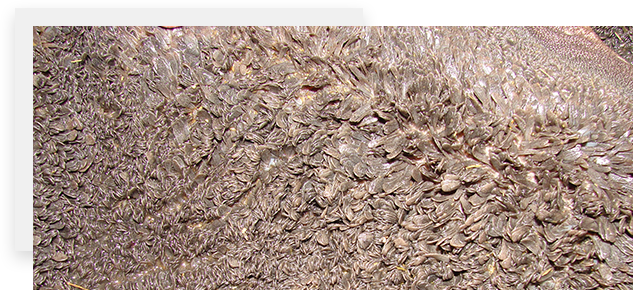
Healthy rumen papillae

Damaged rumen papillae with lesion
Buffering Capacity
TO PREVENT SUB-ACUTE RUMEN ACIDOSIS
Fiber digesting bacteria growth is favoured when rumen pH is between 6.0 and 6.8, while starch digesting bacteria growth is favoured by a pH from 5.5 to 6.0.
Therefore, the high producing ruminant must maintain a pH near 6.0 for optimal growth of both bacteria populations, resulting in favourable VFA yield and ratios.
The long term effect of acidosis results in the decrease and eventual destruction of rumen papillae, mainly in the ventral sac. Depending on severity, lesions are expected to cause pain and discomfort resulting in reduced feed intake, and may interfere with normal rumen function. In extreme cases and long periods of rumens under damaged conditions it may lead to reduced production or growth.
Inclusion Levels
To be incorporated in the ration at a rate of 0.5 – 2% for ruminant feeds
Always consult your qualified animal nutritionist for specific inclusion levels and application in other animal groups or species.
Species
RUMI-BUFF APPLICATION
(g / animal / day)
Dairy Cows
50 – 100
Beef Animals
30 – 60
Small Stock
8 – 15
Contact us
 +27 83 590 3014
 info@rumi-buff.co.za


